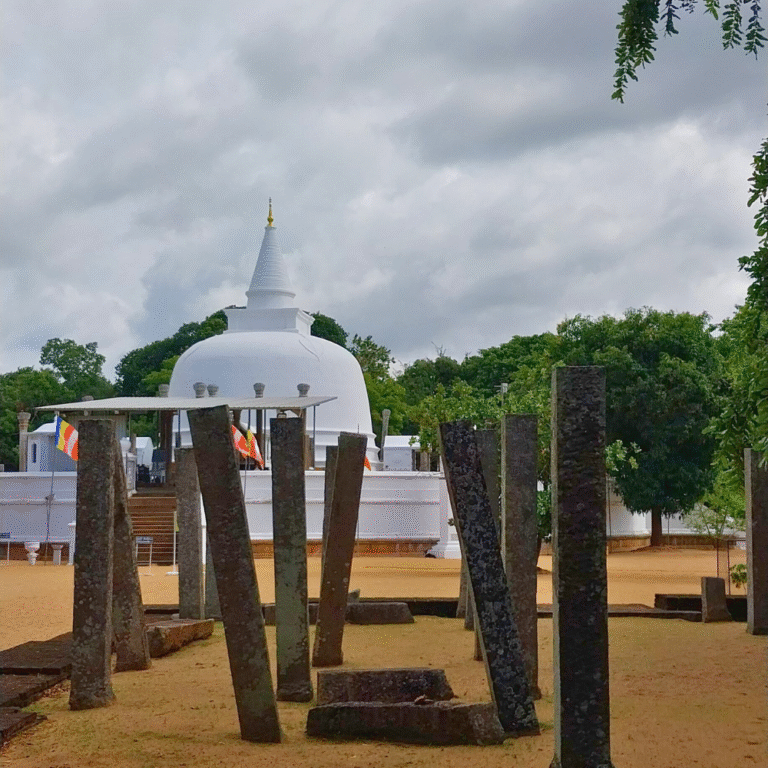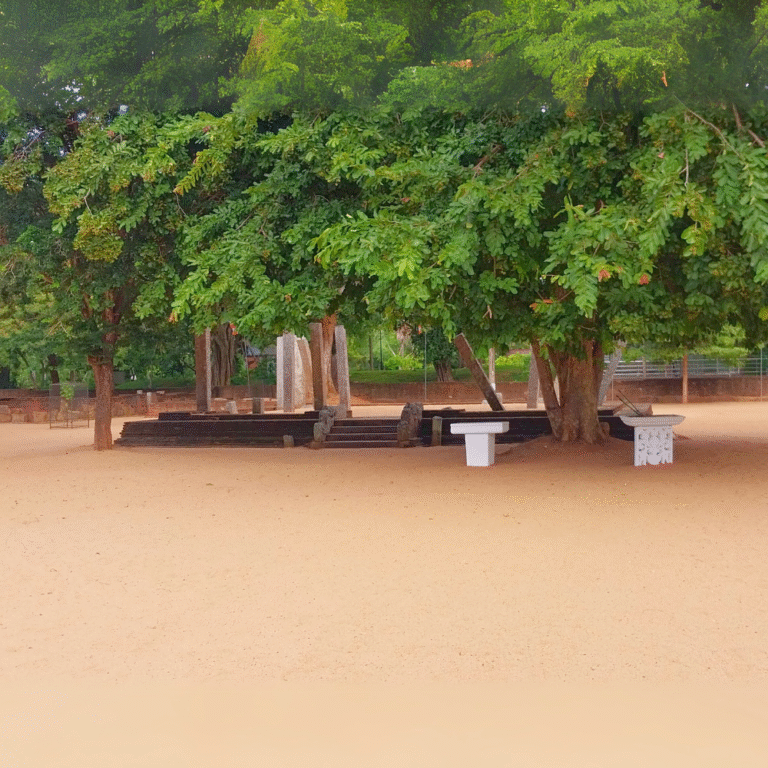
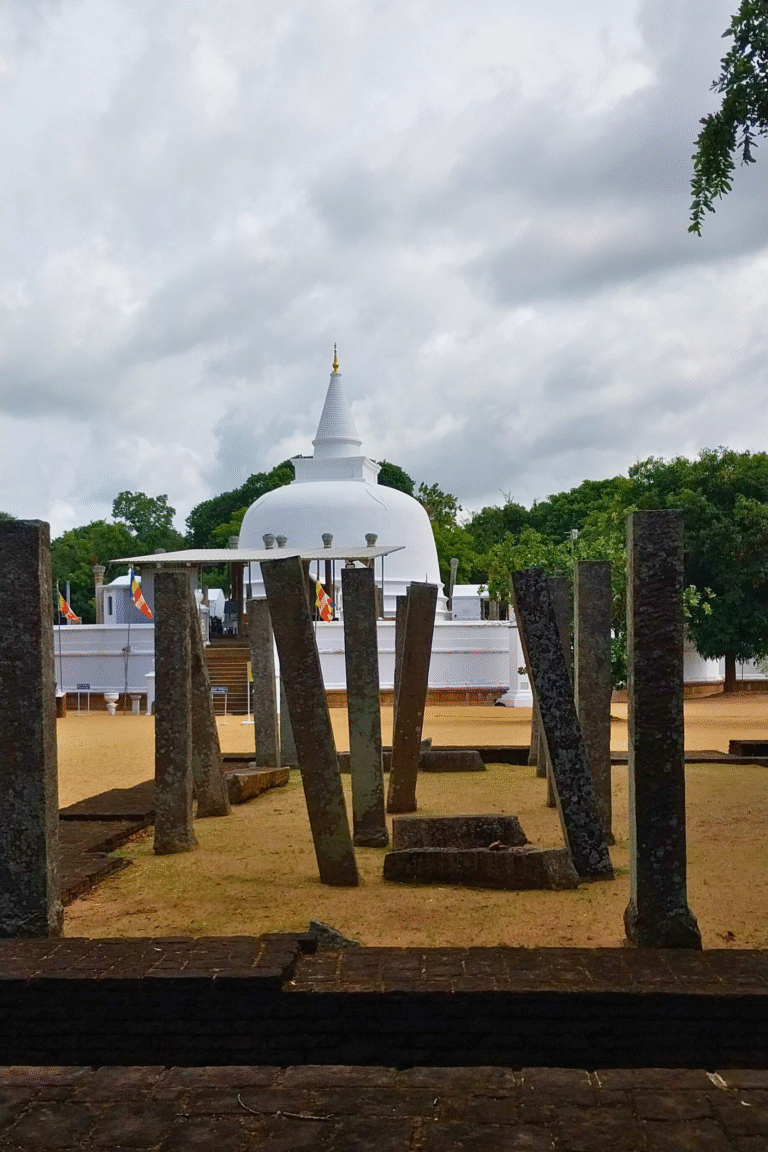
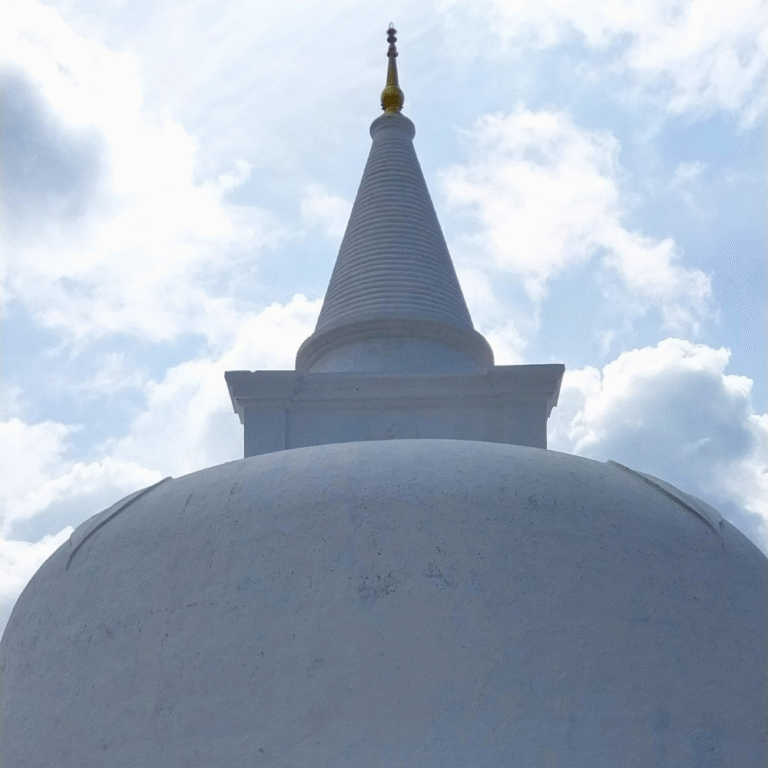
Lankaramaya ancient stupa under blue sky

Lankaramaya – A beautiful religious place in the dry region

Lankaramaya – A beautiful religious place in the dry region

✈️ Why should you visit Sigiriya?

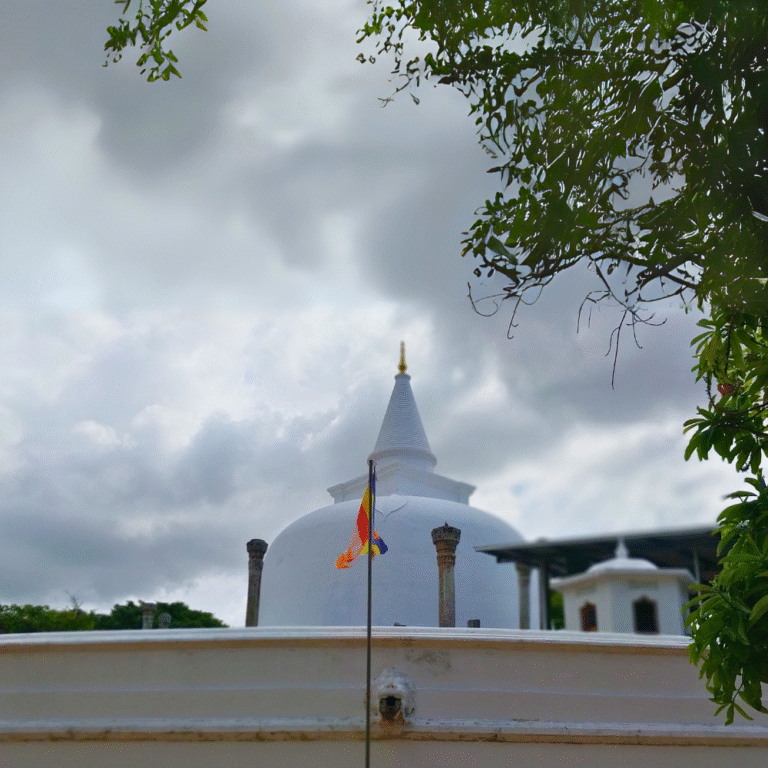
Lankaramaya is an ancient Buddhist stupa in Anuradhapura, Sri Lanka, known for its historic ruins and serene atmosphere.
  • Temple Built on a Refuge Site: King Valagamba built the stupa on the site where he hid from invaders. He named it “Silasobbha Khandaka Cetiya.”
  • Possible Repository of Sacred Relics: According to a modern tradition, the stupa enshrines three small, sacred bone fragments of the Buddha. These relics are believed to be uniquely fragrant and shining.
  • Architectural Twin of Thuparamaya: The stupa’s design closely resembles Thuparamaya, the first stupa in Sri Lanka. This suggests a shared architectural tradition.
  • Remains of a Stupa House (Vatadage): The ruins show rows of stone pillars. These pillars once supported a stupa house (pilimage/railing structure) around the stupa.
  • Part of a Larger Monastic Complex: Lankarama was once part of the massive Abhayagiri Monastic Complex. The nearby Eth Pokuna (Elephant Pond) was likely a water source for the monks of this complex.
Entity

Government

Entrance

Free

Wheelchair Access

No

Water

Available

Restaurants

Available

Toilets

Available

District: Anuradhapura

Reach

Any vehicle

Road Quality

Good

Public Transport

Available

Ancient Buddhist temple Lankaramaya heritage site
White stupa of Lankaramaya in sacred city of Anuradhapura
Lankaramaya stupa in Anuradhapura Sri Lanka
Historic Lankaramaya monument surrounded by trees

Guidelines

Behavior & Respect : Maintain silence, avoid loud talking, and show respect to monks and devotees. Do not touch religious artifacts or offerings. Timing & Rituals : Visit during official temple hours. Participate respectfully in rituals if invited, but do not interfere with ongoing ceremonies. Dress Code : Wear modest clothing that covers shoulders and knees. Avoid shorts, sleeveless tops, or revealing attire inside the temple premises.