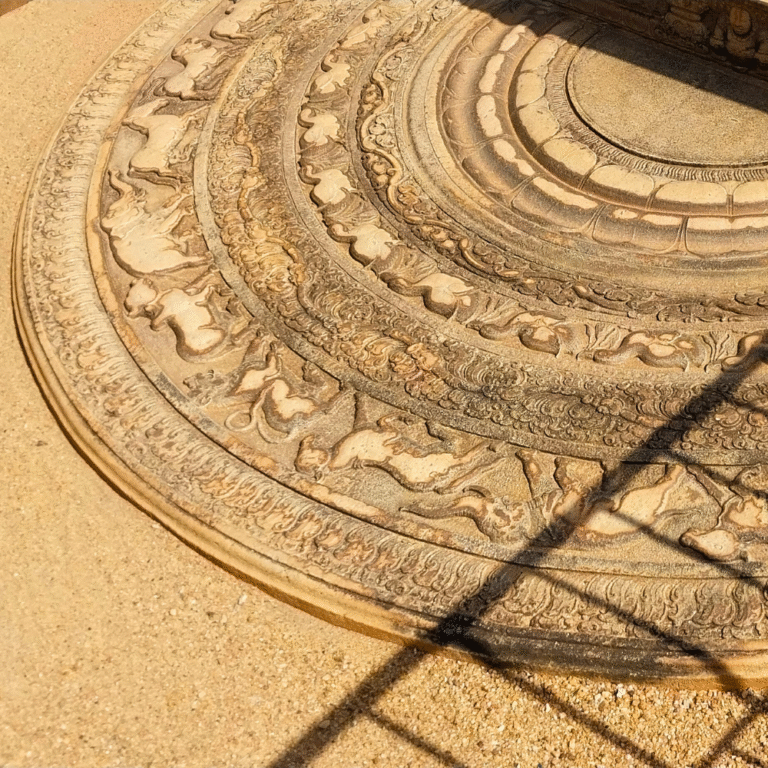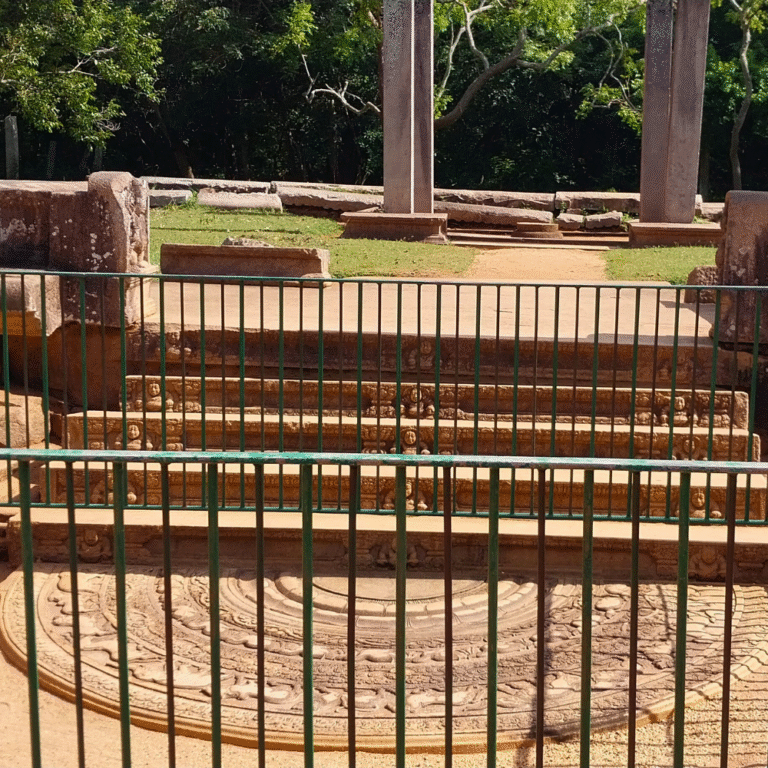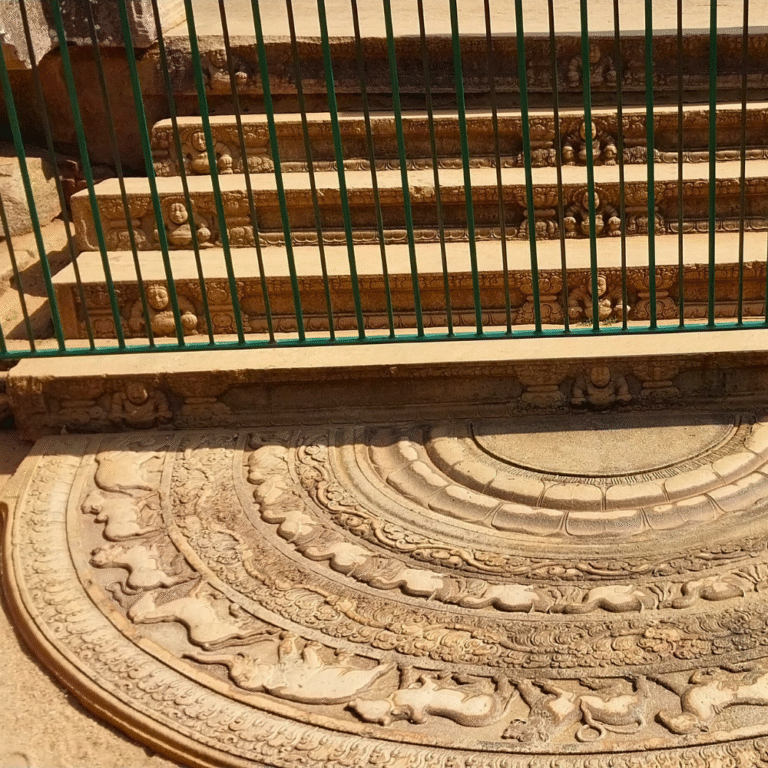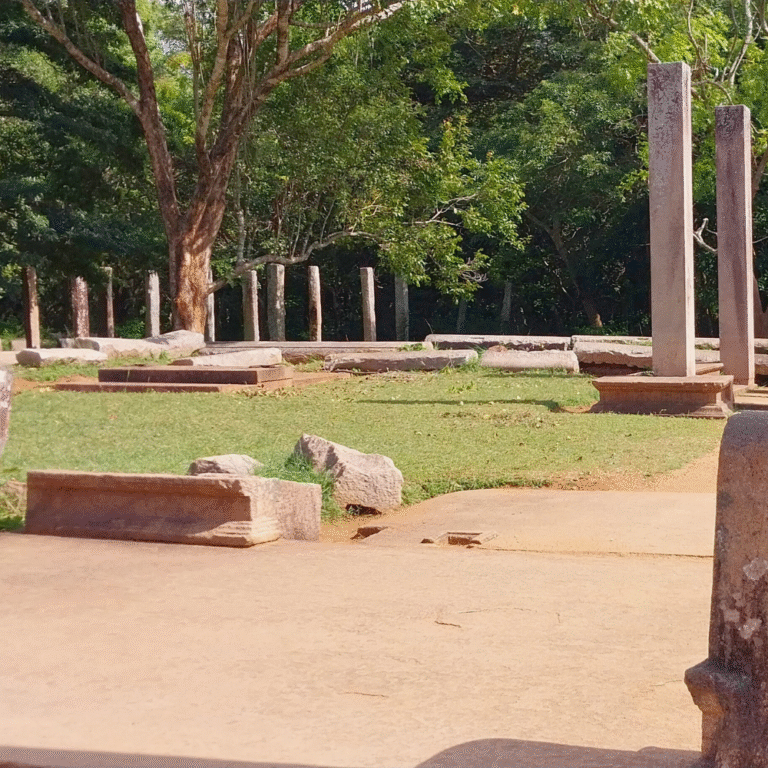
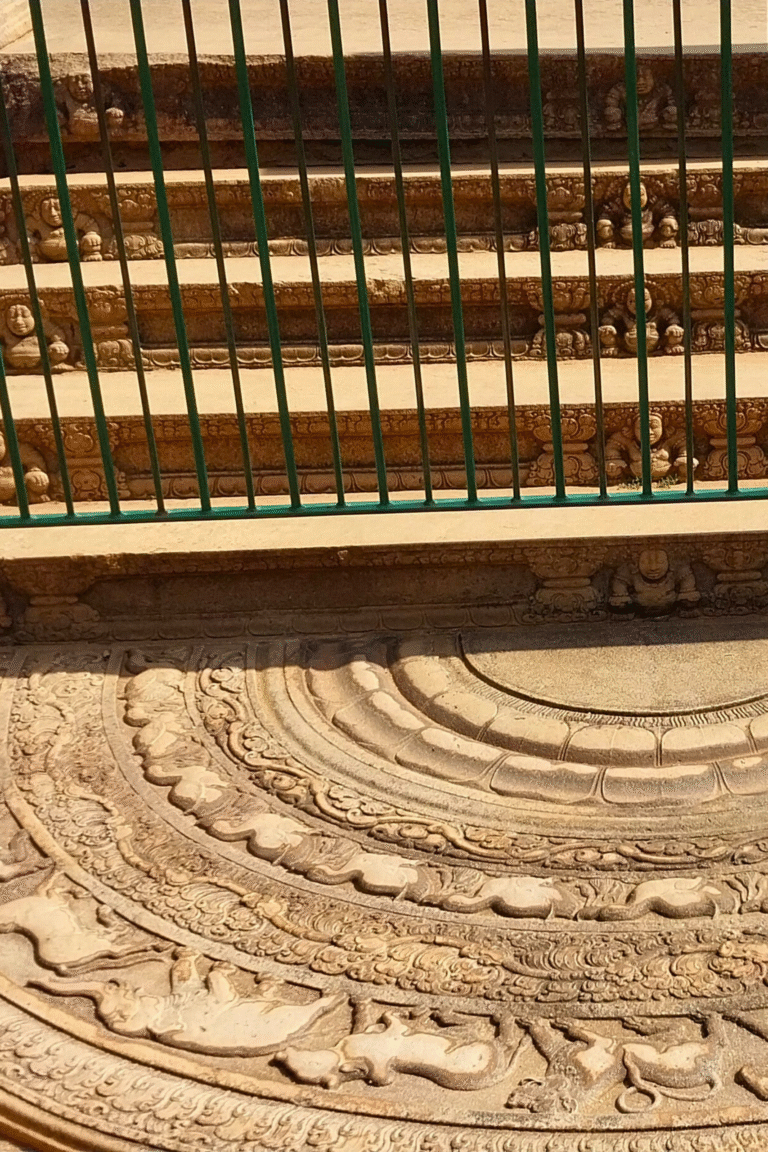
- A Unique Architectural Feature: The moonstone is a unique element of Sri Lankan architecture. It is an intricately carved semi-circular stone slab. It sits at the foot of a staircase, often at a Buddhist temple.
- Deep Buddhist Symbolism: The moonstone carvings symbolize the Buddhist cycle of Samsara. The outermost flame represents the pains of life. The central lotus represents the ultimate bliss of Nirvana.
- Procession of Animals: The carvings feature a procession of four animals. These are the elephant, horse, lion, and bull. They symbolize aspects of worldly life such as desire, attachment, and the cycle of existence.
- A Historical and Artistic Masterpiece: This moonstone is a highly refined example of craftsmanship. It dates back to the 7th or 8th century. It is considered one of the finest and most well-preserved examples from that era.
- Symbolism That Evolved Over Time: The design changed in later periods, such as the Polonnaruwa era. The bull was removed. This was due to Hindu influence, as stepping on the sacred bull was considered disrespectful.