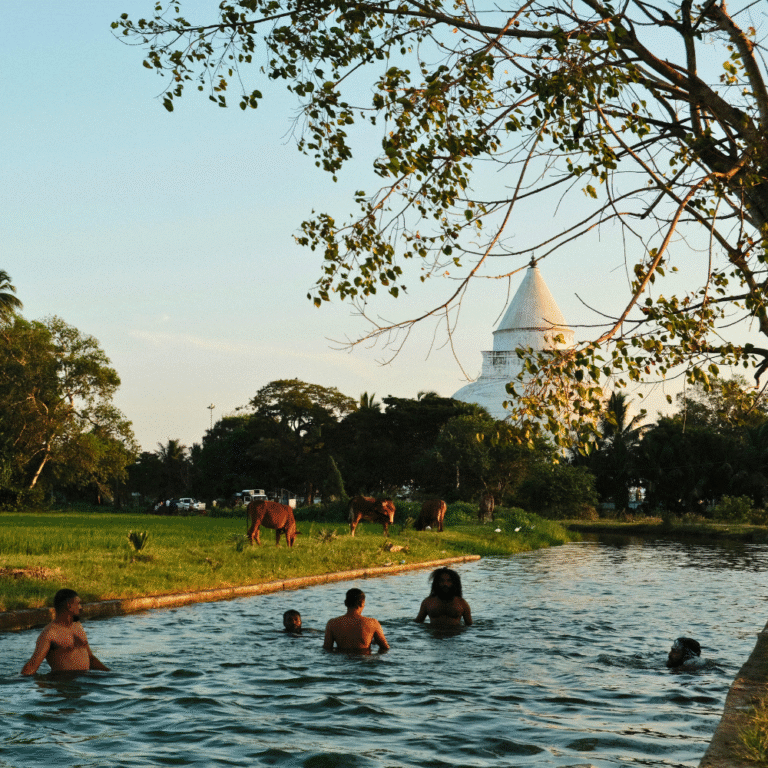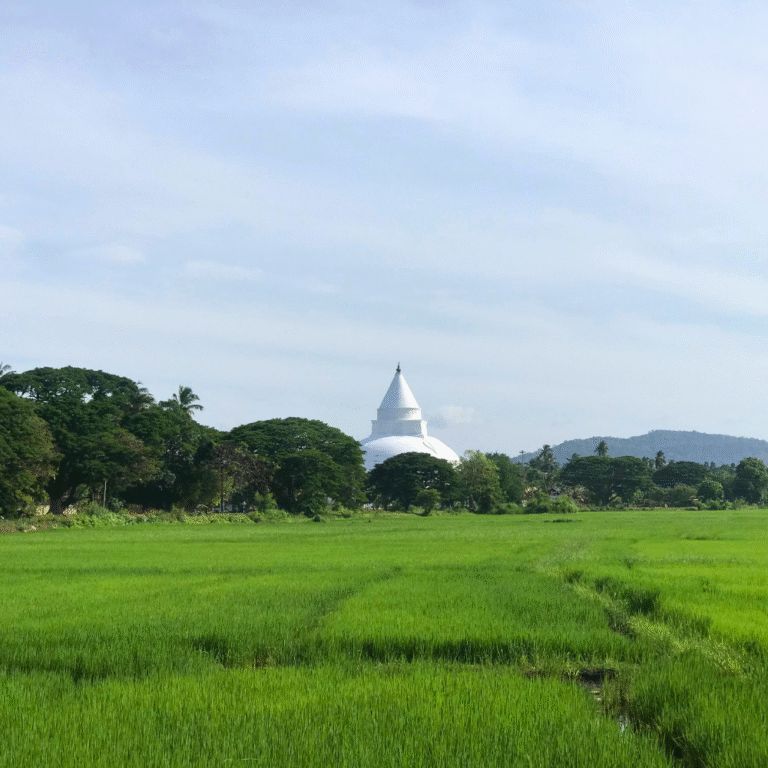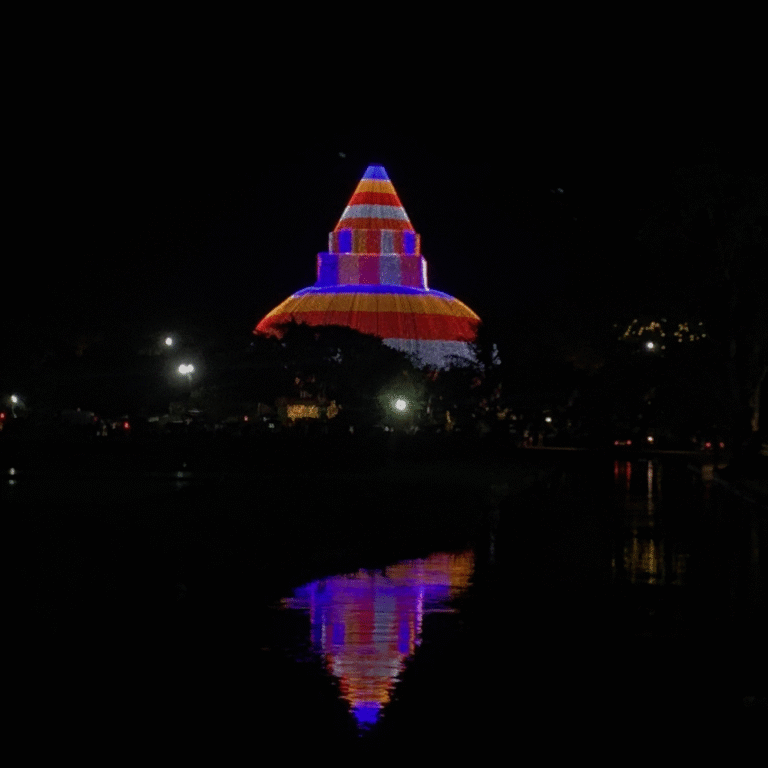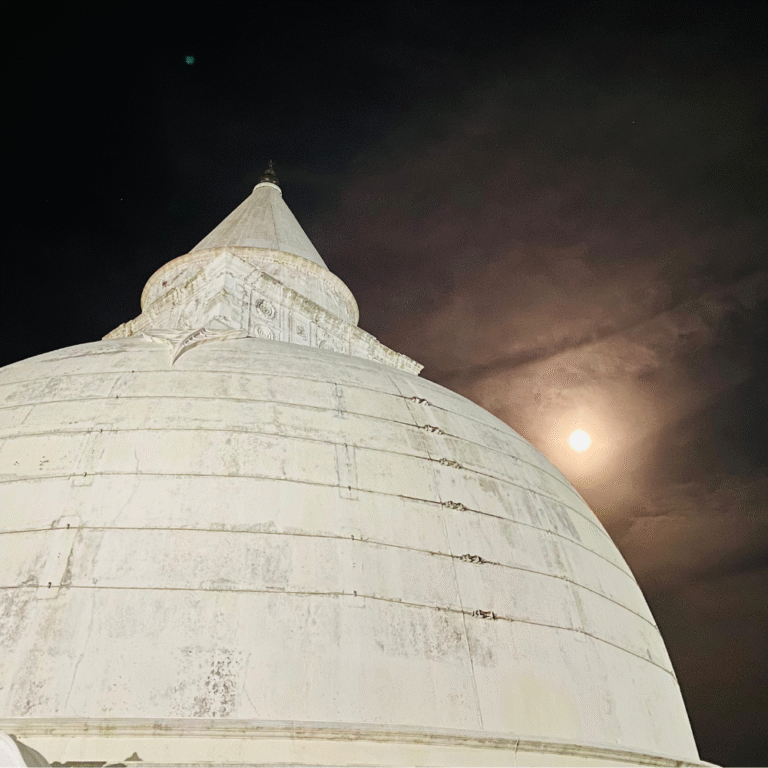
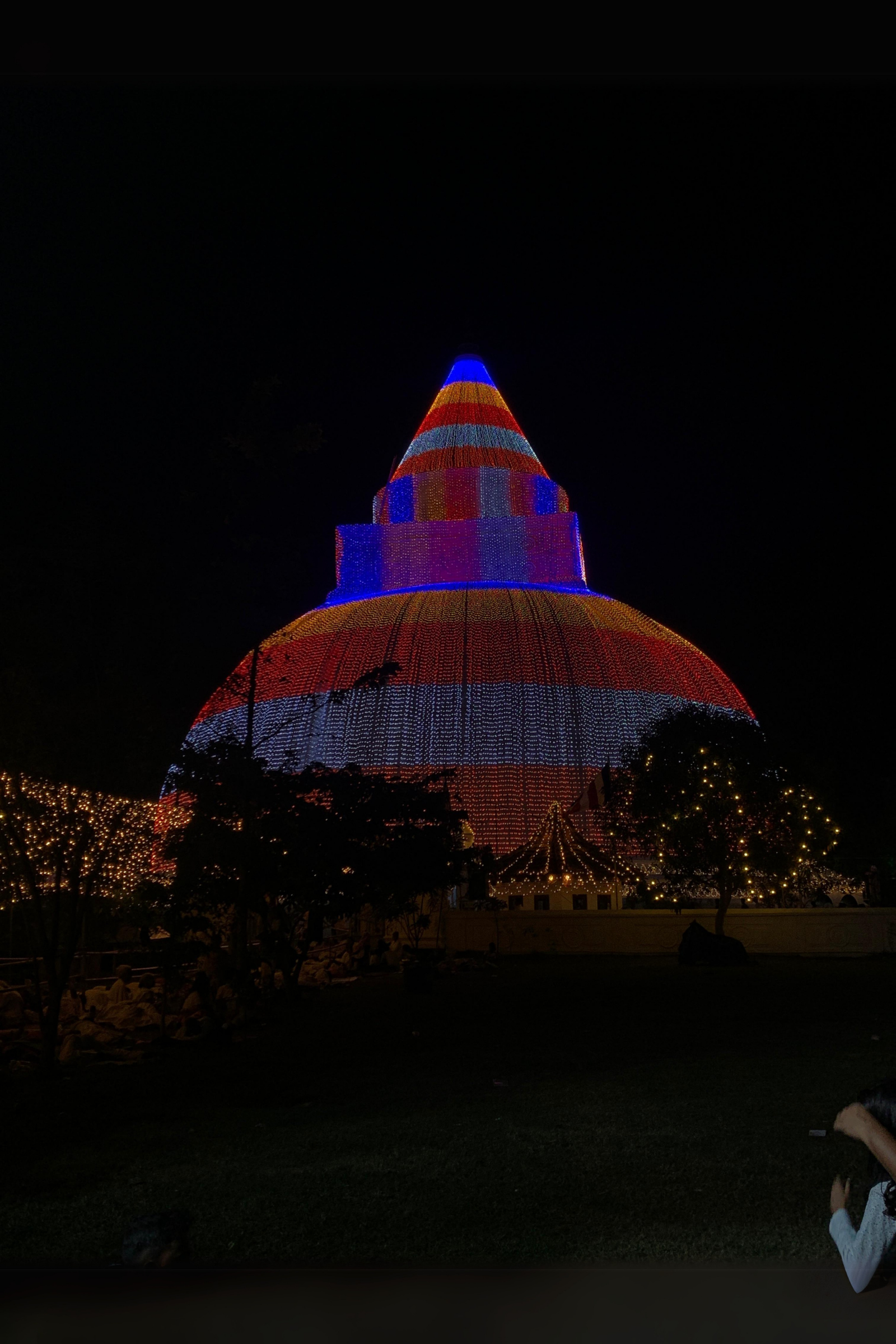
- Ancient Royal Foundation – Established initially in the 3rd century BC by King Mahanaga of Ruhuna (as a foundational site or early monastery), and later expanded and significantly developed by King Kavan Tissa (Kavantissa) in the 2nd century BC (around 186–161 BC), it stands as one of the earliest and most significant Buddhist monasteries in southern Sri Lanka.
- Site Consecrated by Buddha – According to ancient scriptures (Mahavamsa and tradition), the site was sanctified by Lord Buddha during his third visit to Sri Lanka, where he meditated there with 500 arhats, elevating its sanctity as one of the Solosmasthana (16 sacred places hallowed by Buddha).
- Home to a Massive Stupa – The Tissamaharama Stupa, soaring to 156 feet (approximately 47.5 meters) with a 550-foot circumference, is the largest stupa in the southern region, a testament to ancient engineering and devotion.
- Center of Southern Buddhist Education – From the 3rd century BC to the 11th century AD, the Tissamaharama monastery was a pre-eminent Buddhist educational hub in southern Sri Lanka, fostering learning and wisdom.
- Enshrined with Sacred Relics – According to tradition and the Mahavamsa, the main relic is the frontal bone (lalata dhathu) of the Buddha (temporarily enshrined before transfer); however, a recent pillar inscription discovery in Kirinda suggests the left tooth relic (vam yati haku daladāva) of the Buddha may also be enshrined here, adding to its spiritual significance (though debated among scholars).