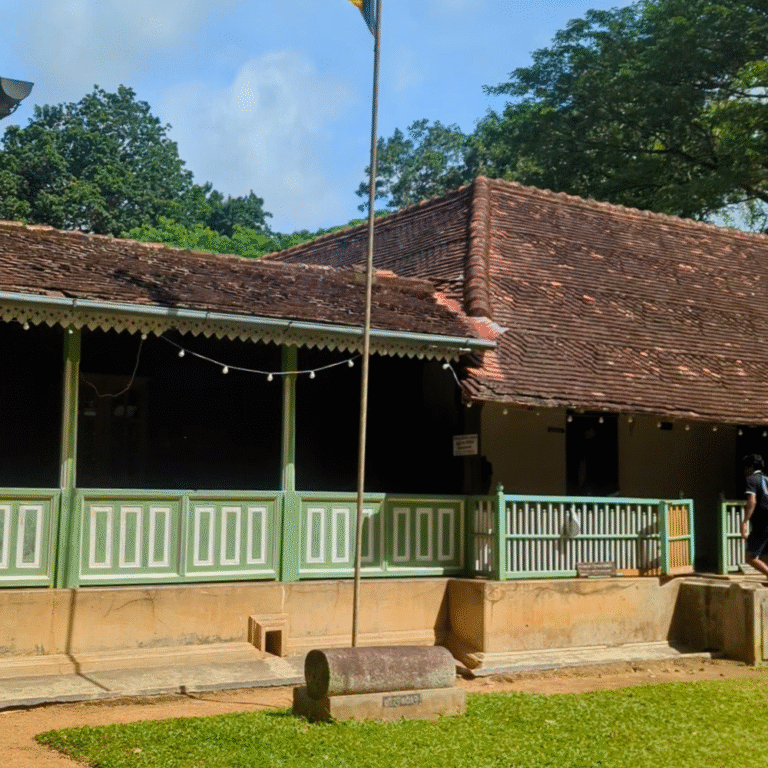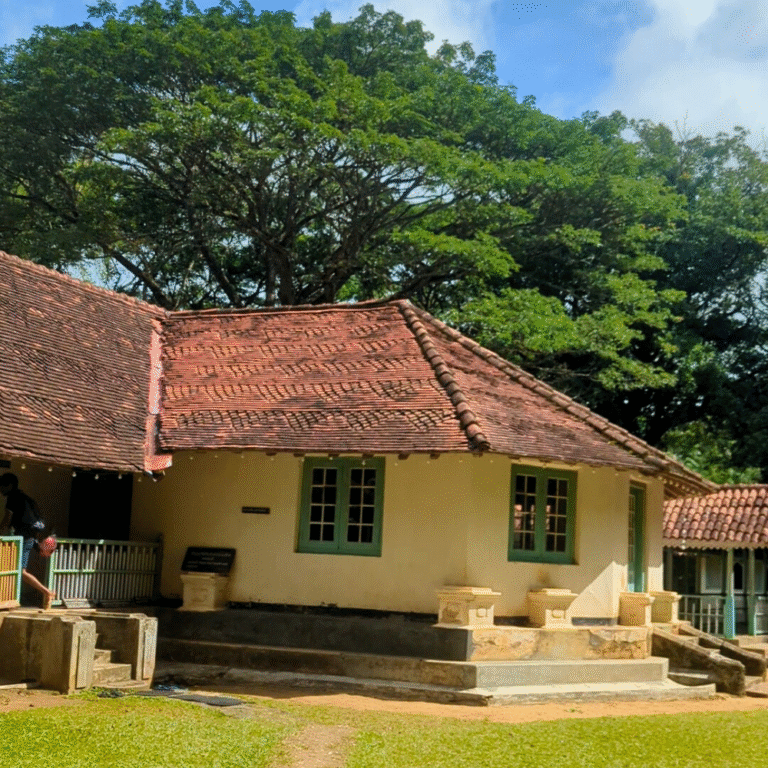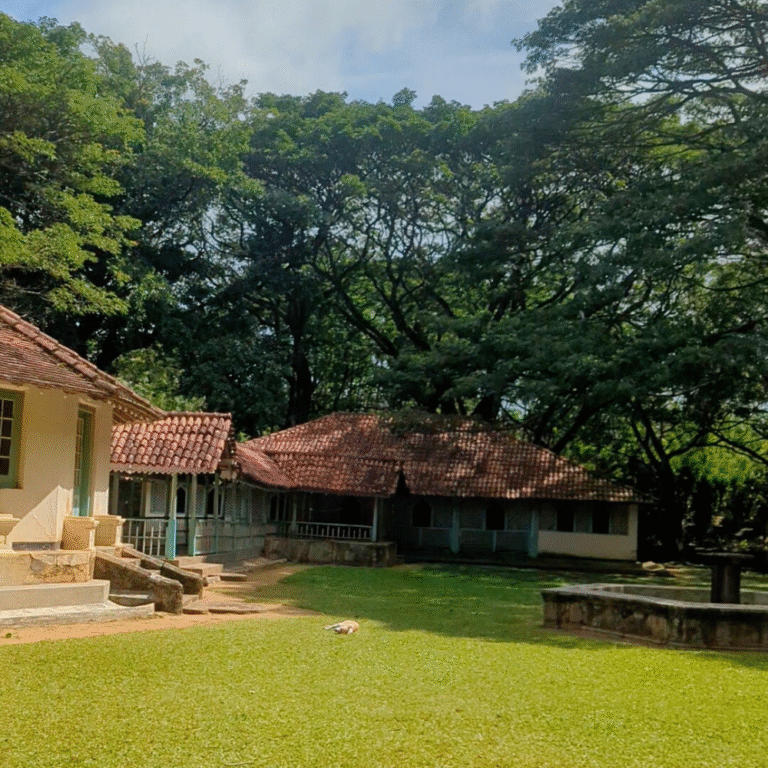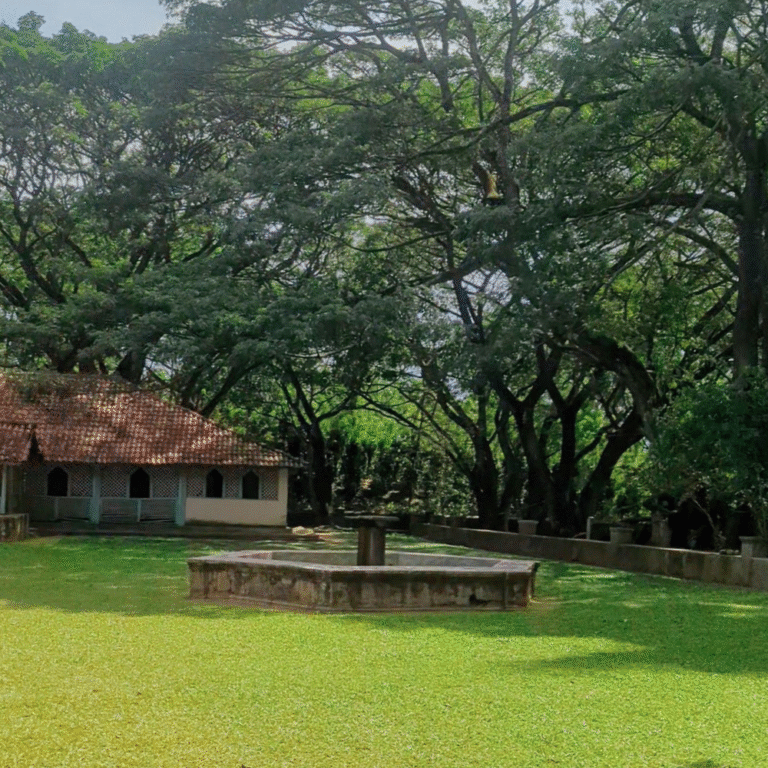
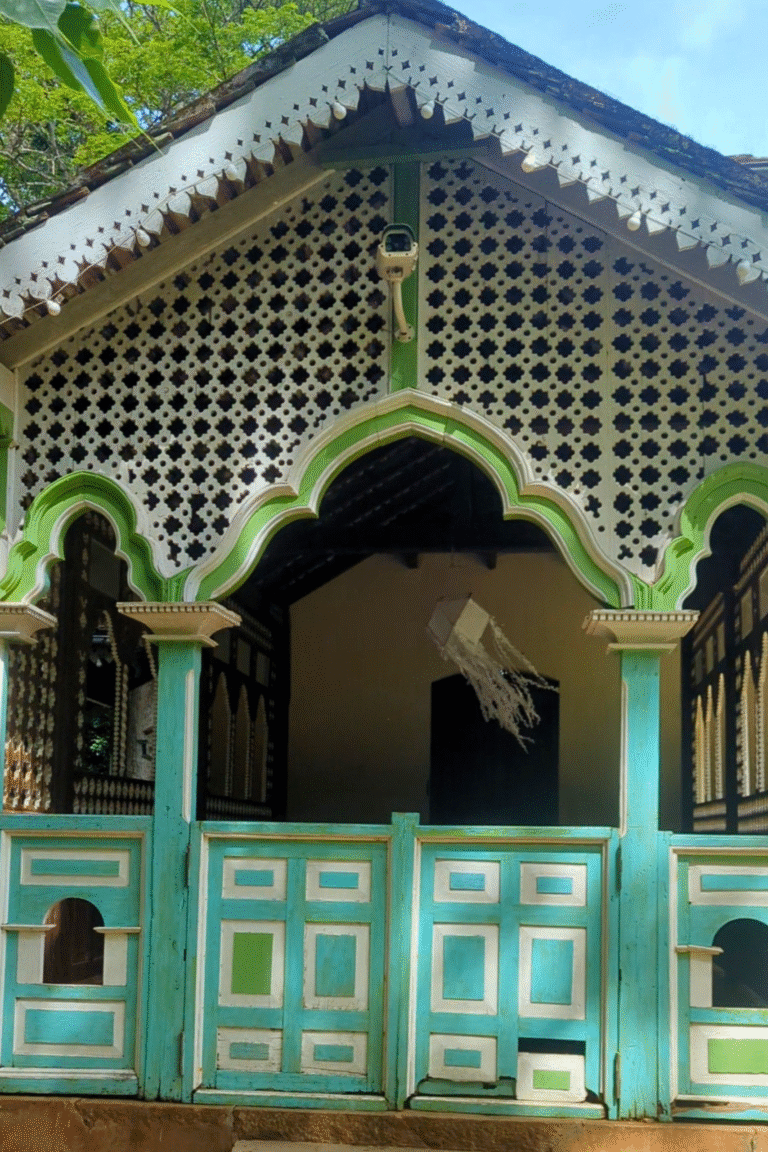
- Historical Legacy and Expansion: Dating back to the 1700s and expanded over generations, Maduwanwela Walawwa showcases a rich architectural evolution culminating in its grand 1905 form, reflecting centuries of the Maduwanwela family’s influence.
- Rebellious Mosaic Floors: The Walawwa features unique mosaic floors made from chipped Dutch tiles, notably incorporating images of Queen Victoria and the sterling pound, believed to be a subtle act of defiance by the Disawe against his colonial masters.
- Architectural Features for Control: Many archways into the grounds are deliberately low, compelling visitors, particularly taller foreigners, to dismount or symbolically “bow” upon entry, a testament to the Disawe’s assertion of authority.
- The Disawe’s Court and Justice System: On the grounds, a preserved courthouse with original furniture and punishment equipment offers a glimpse into how the Disawe personally administered justice, settling disputes from land to matrimony.
- Conversion into a Museum: Since 1974, Maduwanwela Walawwa has been meticulously preserved and administered by the Department of Archaeology as a museum, allowing visitors to explore its unique architecture, historical artifacts, and the story of the “Dark Prince of Ceylon.”