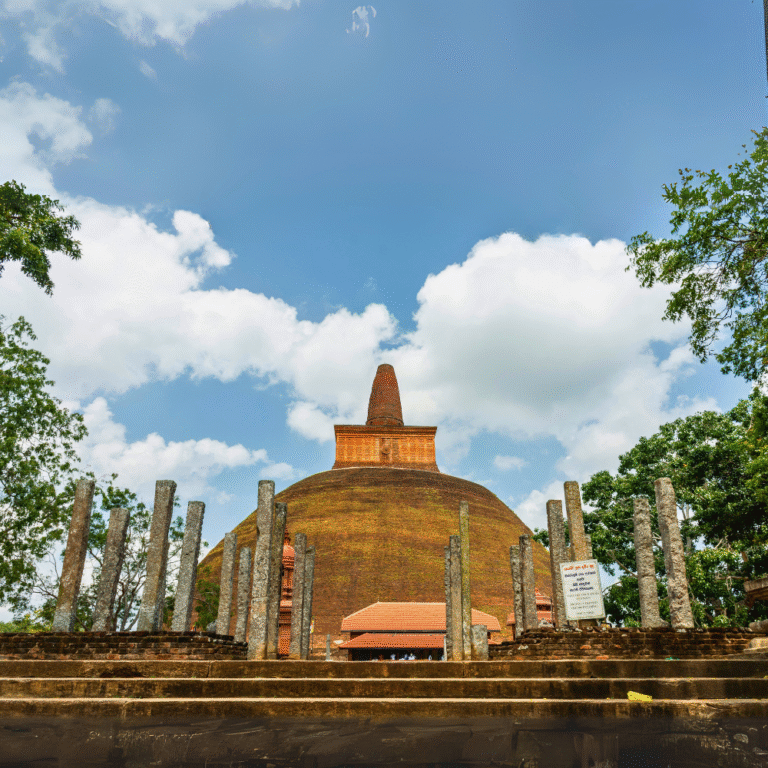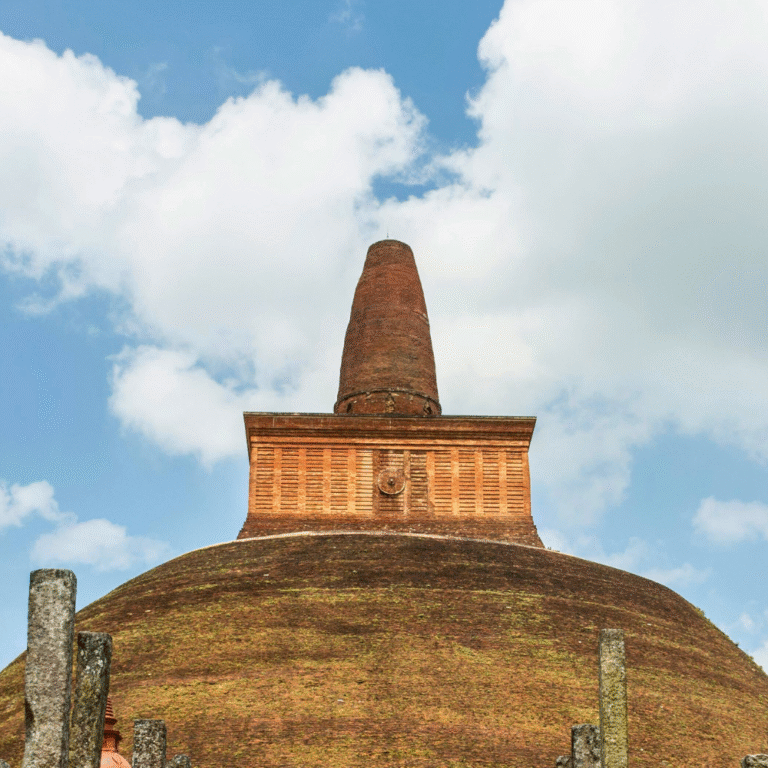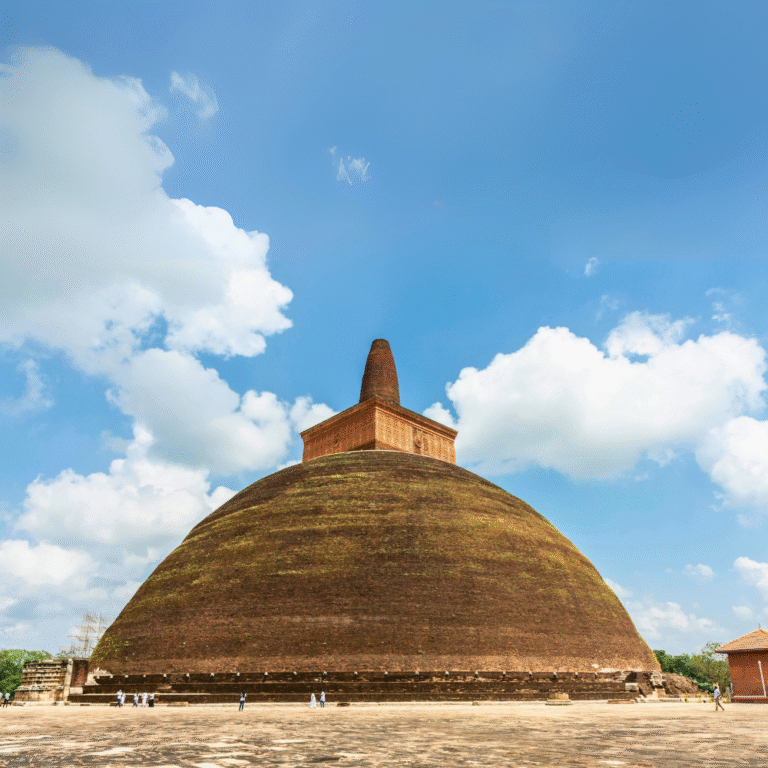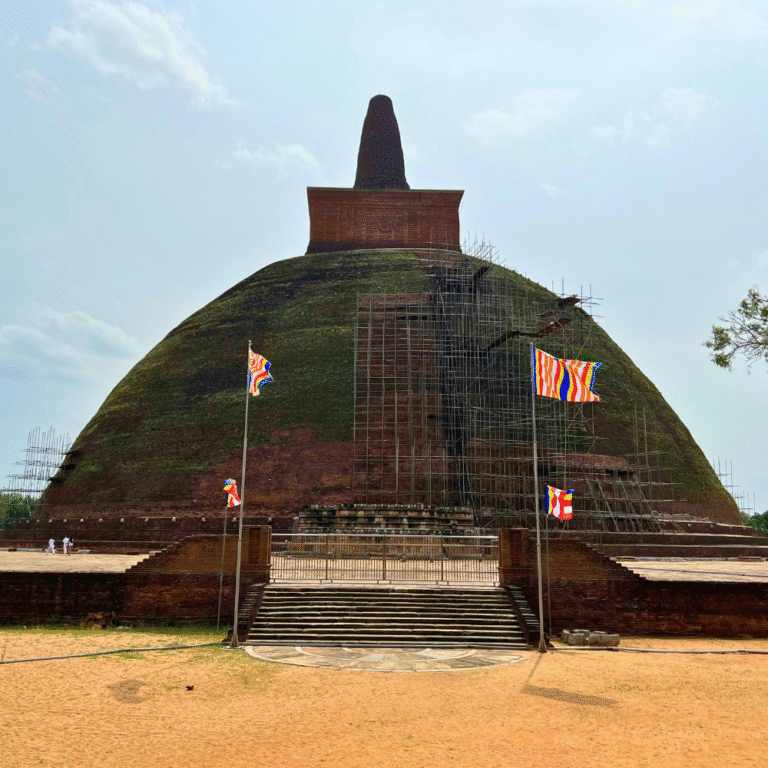
- Symbol of Religious Diversity: Abhayagiri Vihāra was a major center for multiple Buddhist traditions. It housed practitioners of Theravada, Mahayana, and Vajrayana Buddhism. This contrasts with the more conservative Mahavihara monastery.
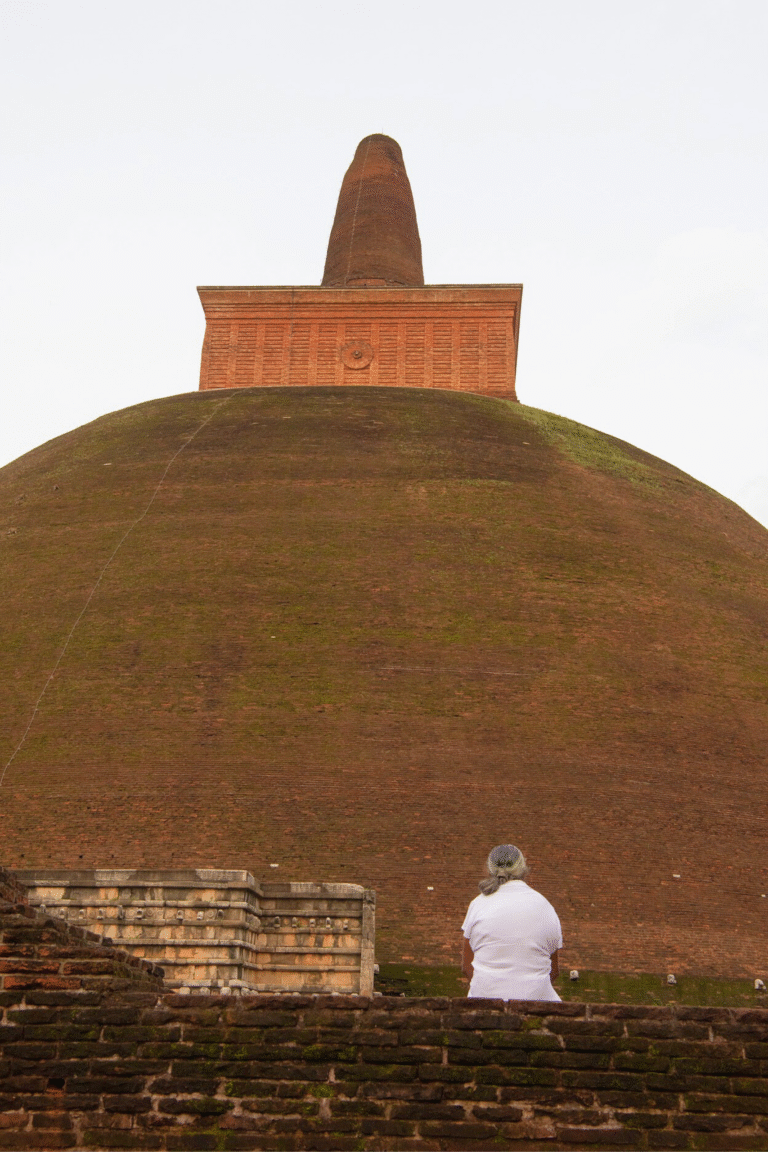
- Historically Significant Stupa: The Abhayagiri Dagaba is a focal point of the complex. It’s the second-largest stupa on the island and was once the original custodian of the Tooth Relic in Sri Lanka.
- Political Origins: The monastery was founded by King Valagamba in the 1st century BCE. He built it on the site of a Jain monastery after a Jain monk insulted him as he was fleeing an invasion. The name “Abhayagiri” combines the king’s name (Abhaya) and the monk’s name (Giri).
- International Center of Learning: Abhayagiri was not just a monastery but an international institution. Historical records show it had well-established relations with ancient China and Java, and it attracted scholars from distant locations.
- Architectural and Symbolic Carvings: The site features unique architectural elements and carvings that blend Buddhist and Hindu beliefs. These include elaborate guard stones with figures like the Nagaraja (King Cobra) and exquisitely carved moonstones that symbolize the Buddhist path to nirvana.