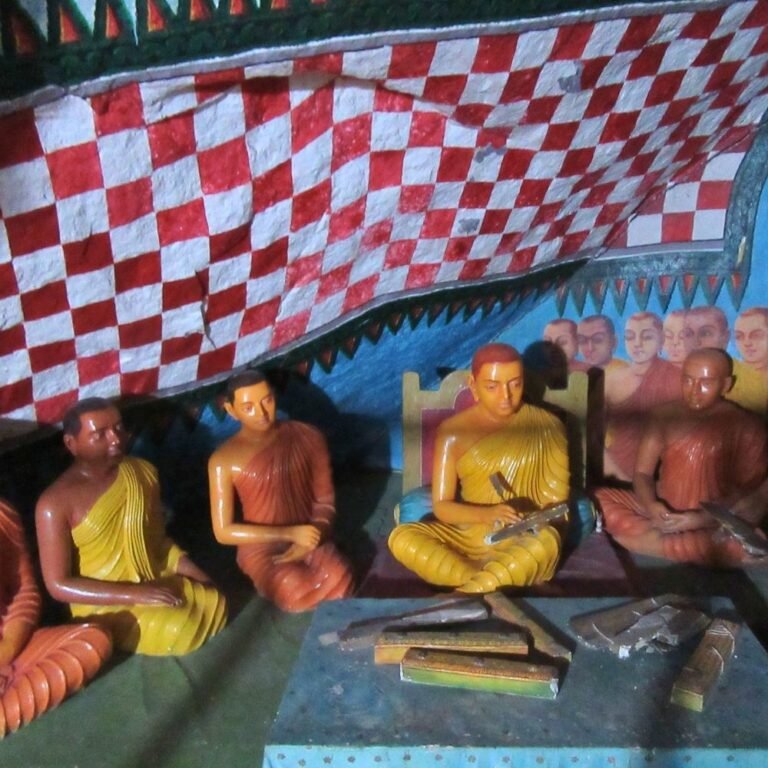
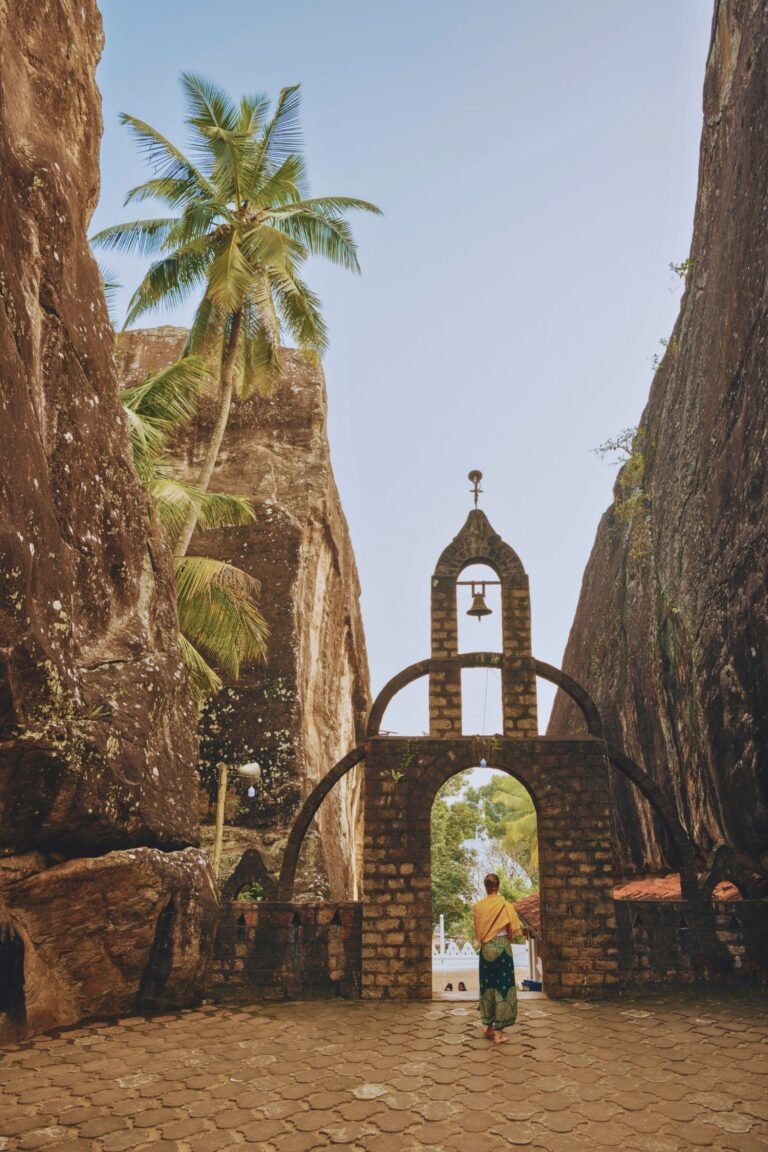
- The Birthplace of Written Buddhist Scripture: The temple is the historic location where the Pāli Canon, the foundational text of Theravada Buddhism, was first written down on ola leaves. This monumental event, undertaken by 500 scholarly monks, ensured the survival of the Buddha’s teachings after a period of famine and foreign invasion.
- Unique Murals and Graphic Art: The walls of the caves feature a range of unique murals. These include vivid depictions of the Jataka stories as well as graphic scenes of Buddhist hell, which serve as cautionary tales for visitors.
- A Reclining Buddha within a Cave: One of the temple’s largest caves houses an oversized reclining Buddha statue. The cave’s ceiling is adorned with a unique “psychedelic texture” of geometric and floral patterns that follow an ancient tradition.
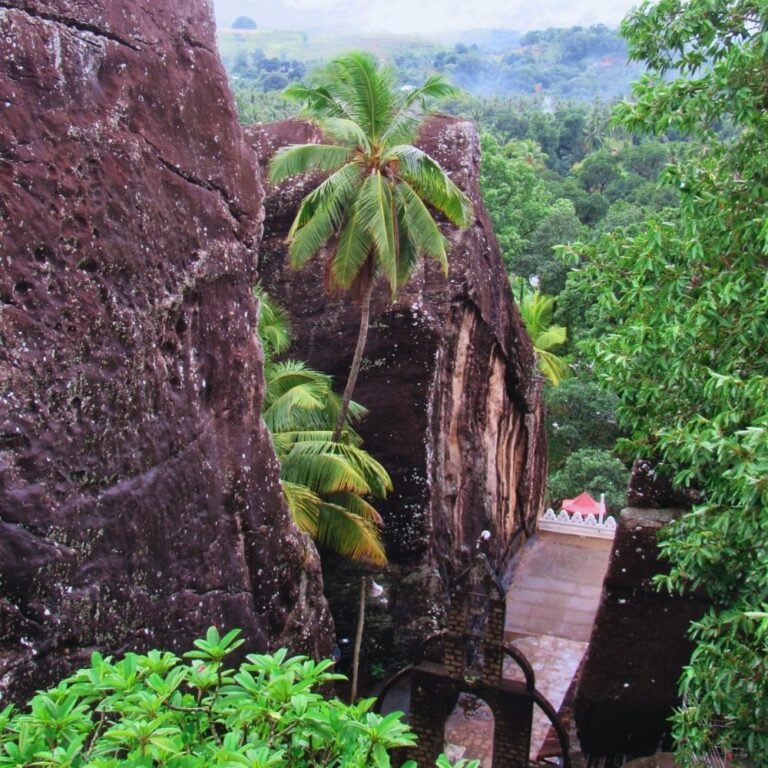
- Unverifiable Legends and Folklore: The temple’s history is rich with compelling, though unverified, stories. Folklore explains that the name “Aluviharaya” means “temple of light” and that the cave system was created by a massive landslide. A rock carving also shows a secret tunnel that King Walagamba supposedly used to escape during an invasion.
- A Living Heritage of Oral Tradition: After the original manuscripts were destroyed in 1848, monks embarked on a decades-long effort to re-transcribe the scriptures, a project that was finally completed in 1991. The temple now holds the new talipot leaf manuscripts in its library, preserving the ancient tradition for future generations.