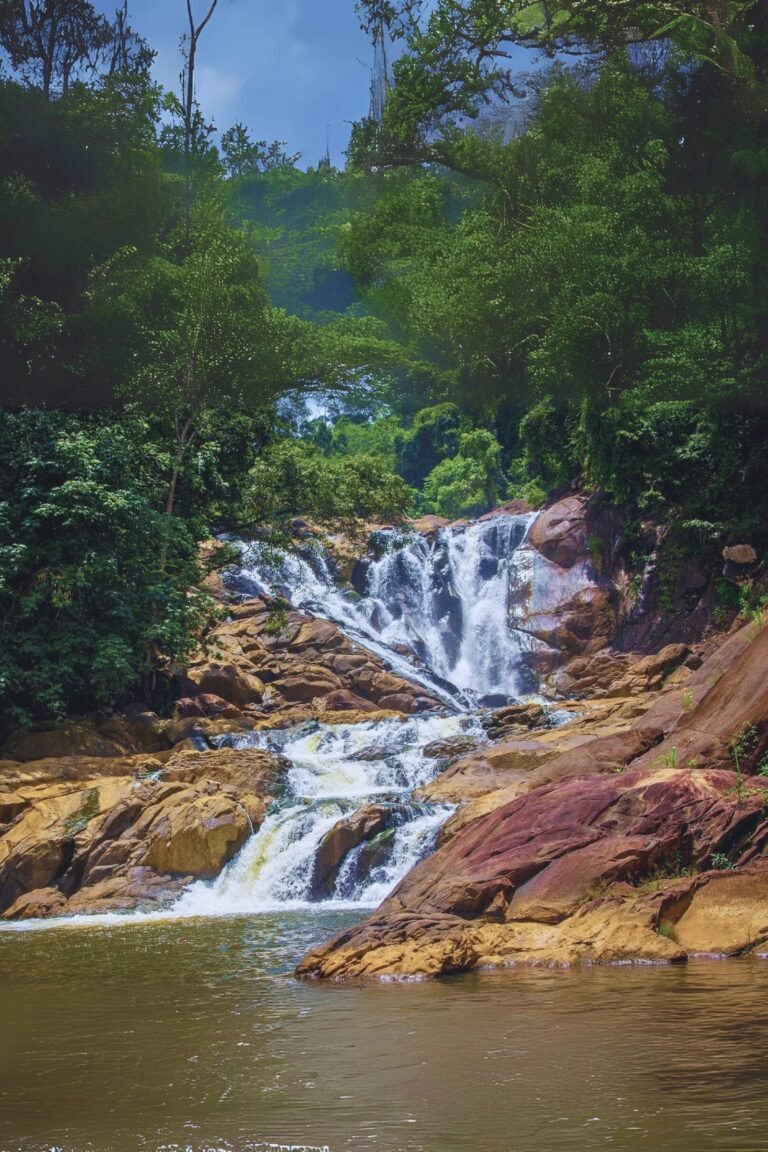
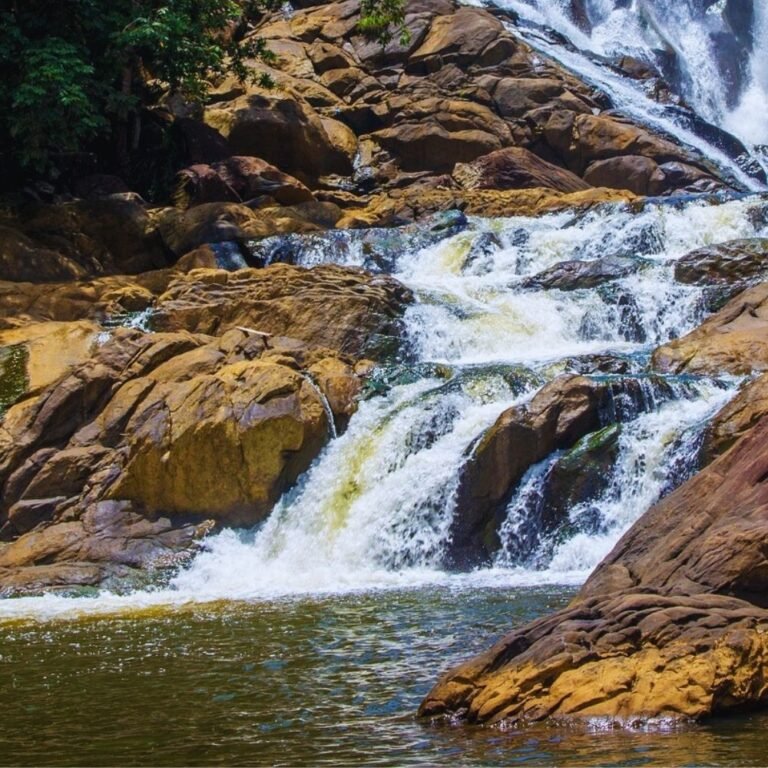
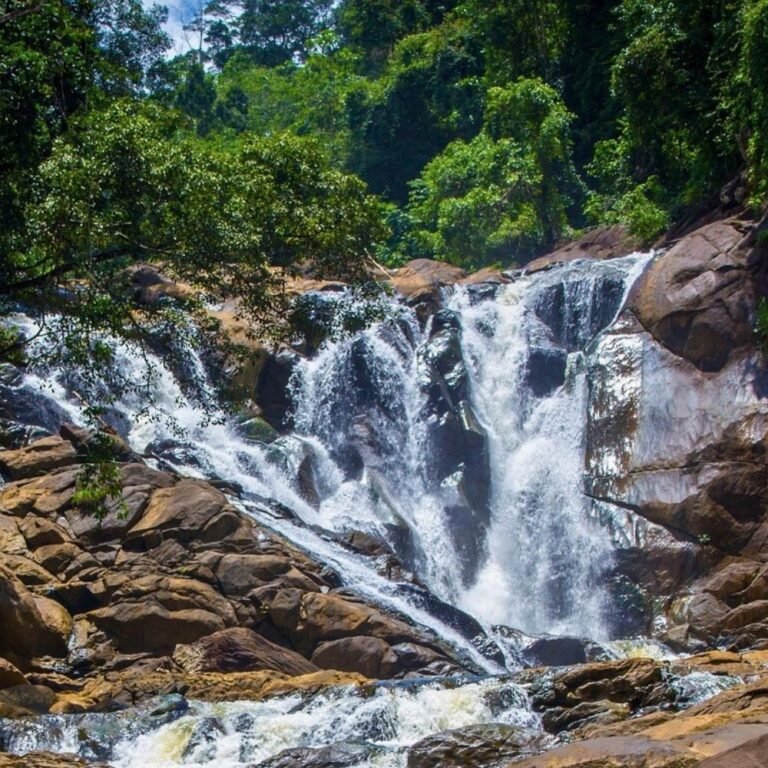
Natural scenery around Ethamala Ella Waterfall

Ethamala Ella Waterfall – A beautiful waterfall in Sri Lanka

Ethamala Ella Waterfall – A beautiful waterfall in Sri Lanka

✈️ Why should you visit Sigiriya?

Ethamala Ella Waterfall is a stunning 52-meter cascade near Morawaka, famous for its name, which translates to “Dead Elephant Waterfall,” based on a tragic local legend.
  • Name from Tragic Elephant Story: The falls are named “Ethamala Ella” (meaning “Dead Elephant Waterfall” in Sinhala). This name originated from a local legend about an elephant that was tragically swept away and died in the powerful water.
  • Formed by Nilwala Ganga River: This 52-meter-high waterfall is created by the Nilwala Ganga. It is a major water source in the Matara District
  • Unsuitable Natural Rock Pool: The falls tumble down in two distinct drops into a large, natural rock pool basin. This pool, however, is considered unsuitable for bathing.
  • Location of a Small Hydropower Plant: Uniquely, a small hydropower plant currently operates. This plant is located right at the base of the waterfall.
  • Thriving Wildlife Habitat: The surrounding area is a thriving wildlife habitat. It is noted especially for various bird species whose songs complement the sound of the cascading water.

Entity

Government

Entrance

Free

Wheelchair Access

No

Water

Available

Restaurants

Available

Toilets

Available

District: Matara

Reach

Any vehicle

Road Quality

Good

Public Transport

Available

Beautiful view of Ethamala Ella Waterfall in Sri Lanka
Ethamala Ella Waterfall cascading through lush greenery

Guidelines

Wear proper footwear – The trail can be slippery and uneven, especially during the rainy season. Good hiking shoes with grip are essential for safety. Avoid visiting during heavy rain – Flash floods and leeches are common during wet weather. Always check the weather forecast before planning your visit. Do not litter or leave plastic behind – Keep the natural beauty intact by carrying your waste back with you. Use eco-friendly items whenever possible. Respect local community and private property – Some access paths pass through village areas or private lands. Be polite, ask permission if needed, and avoid disturbing the locals.