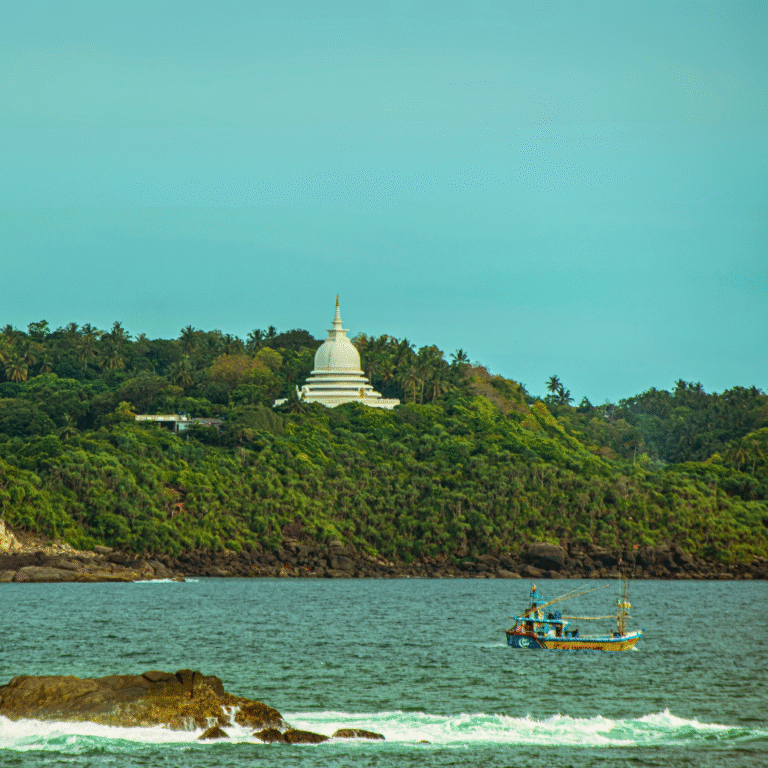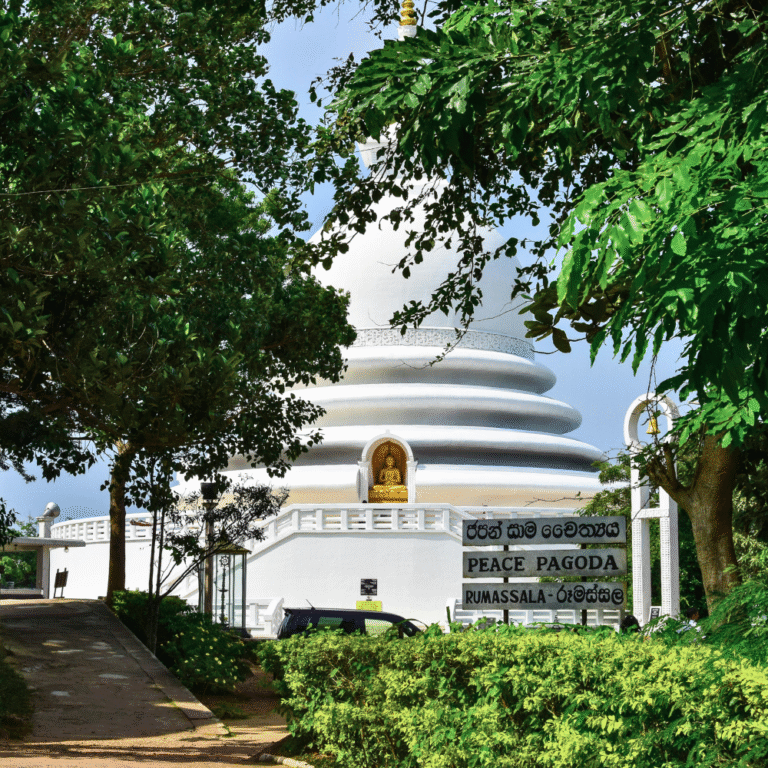
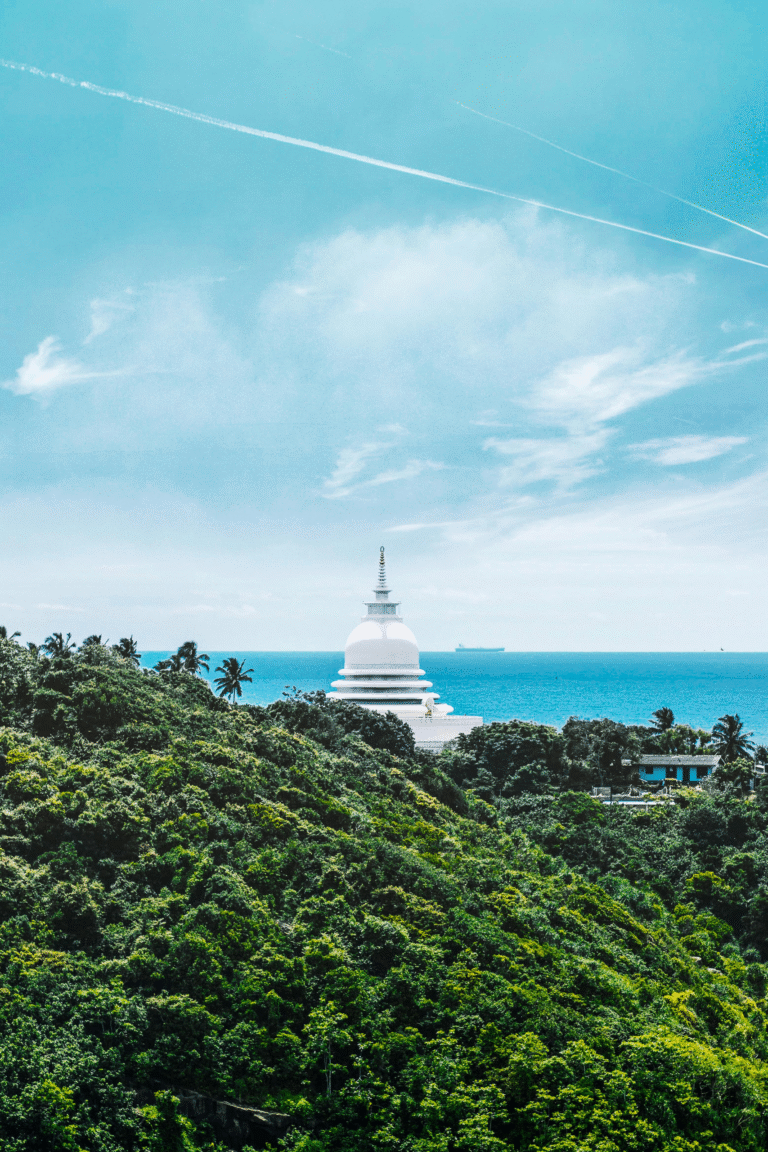
- Symbol of Global Peace: The Peace Pagoda at Rumassala is part of a worldwide movement started by Japanese Buddhist monks to promote peace and non-violence. It was built in 2003 (or consecrated in 2004) as part of the Nipponzan-Myōhōji order’s global peace pagoda initiative.
- Mythological Significance: The hill on which the pagoda stands, Rumassala, is a site of legend. It’s believed to be a fragment of the Himalayan mountain range that the monkey-warrior Hanuman dropped, according to the ancient Indian epic, the Ramayana.
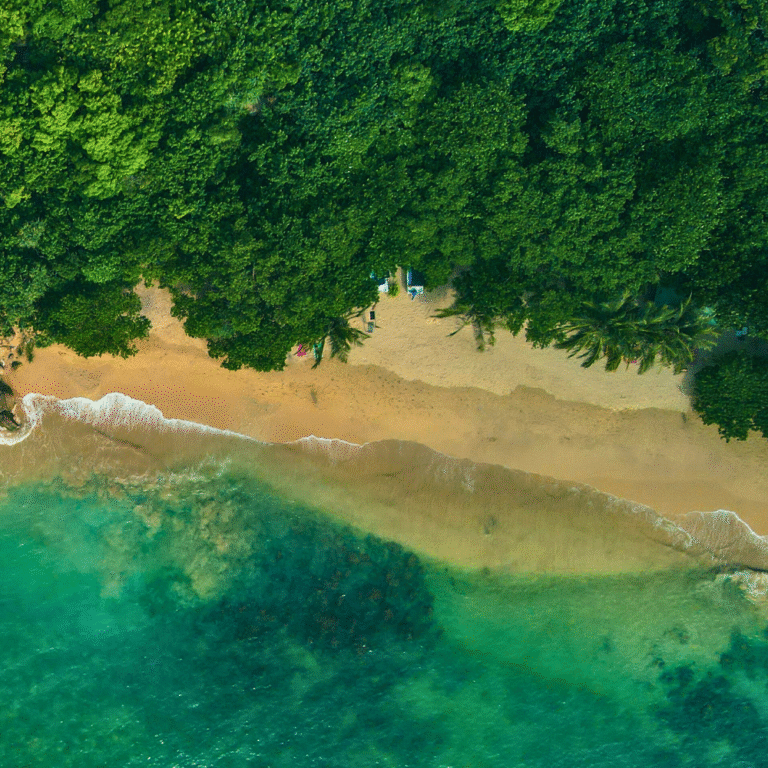
- Stunning Panoramic Views: The pagoda is perched atop the Rumassala hill, offering breathtaking 360-degree views. From here, visitors can see Galle Fort, Galle Bay, the Indian Ocean, and the surrounding lush forest.
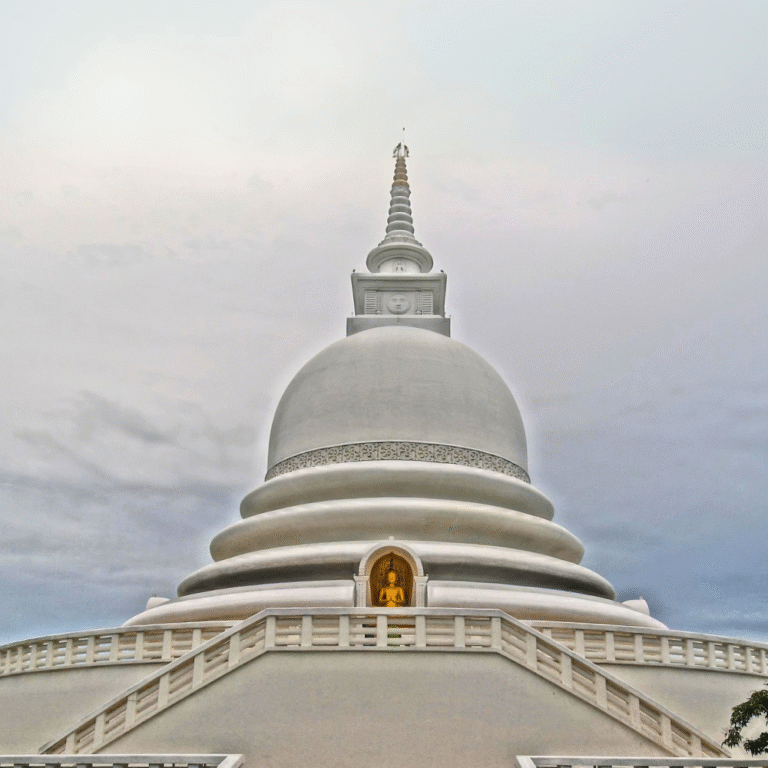
- Architectural and Spiritual Design: The white stupa, or “Sama Ceitya,” features four Buddha statues that depict the pivotal moments of his life: birth, enlightenment, first sermon, and Parinibbana. The minimalist design is meant to be a space for meditation and reflection.
- Historical Site with a Dark Past: The area has a complex history. During the colonial era, the Portuguese reportedly used the hill to deliberately mislead Arab trading ships with false light signals, causing them to crash on the rocks below.