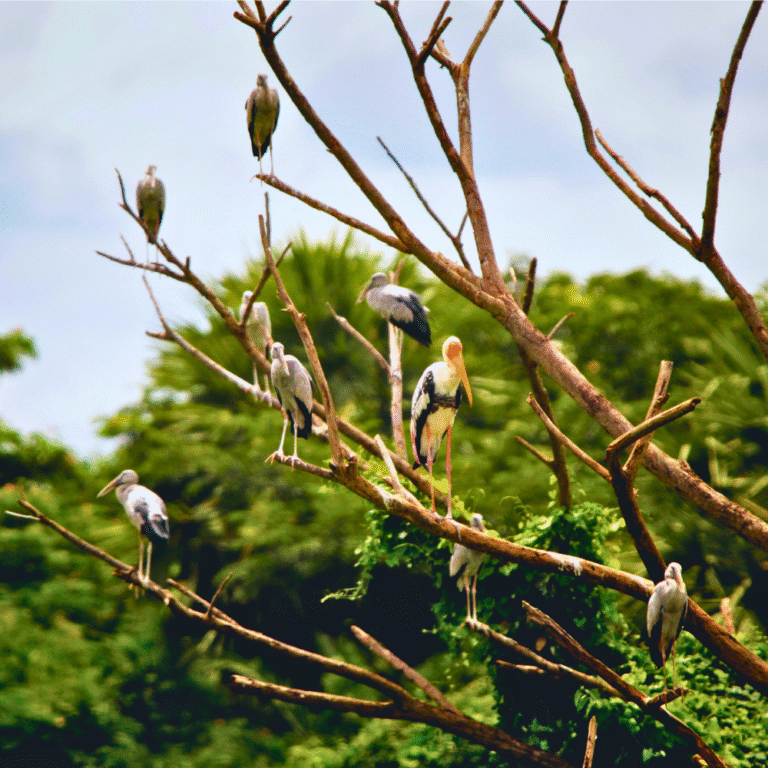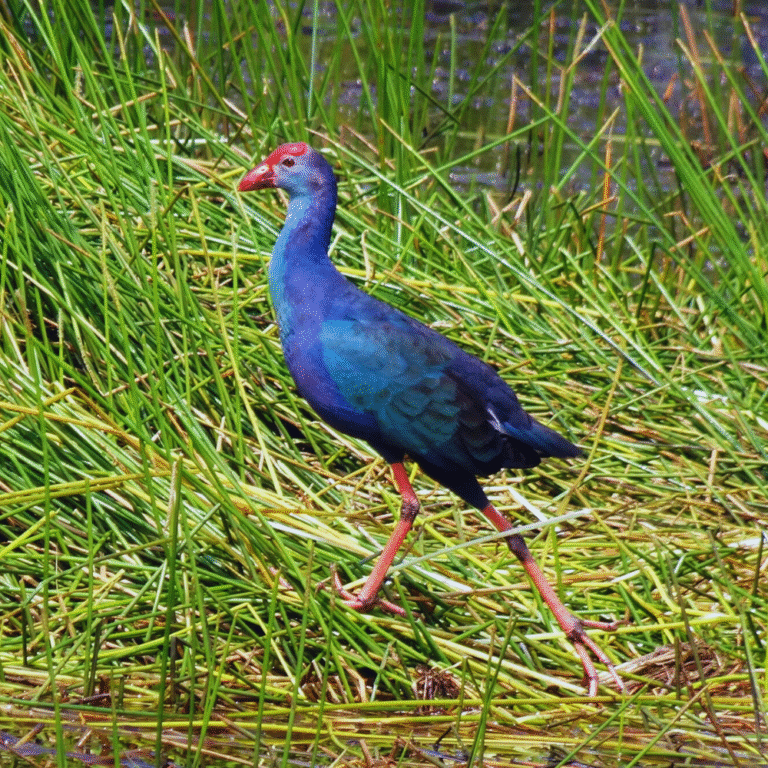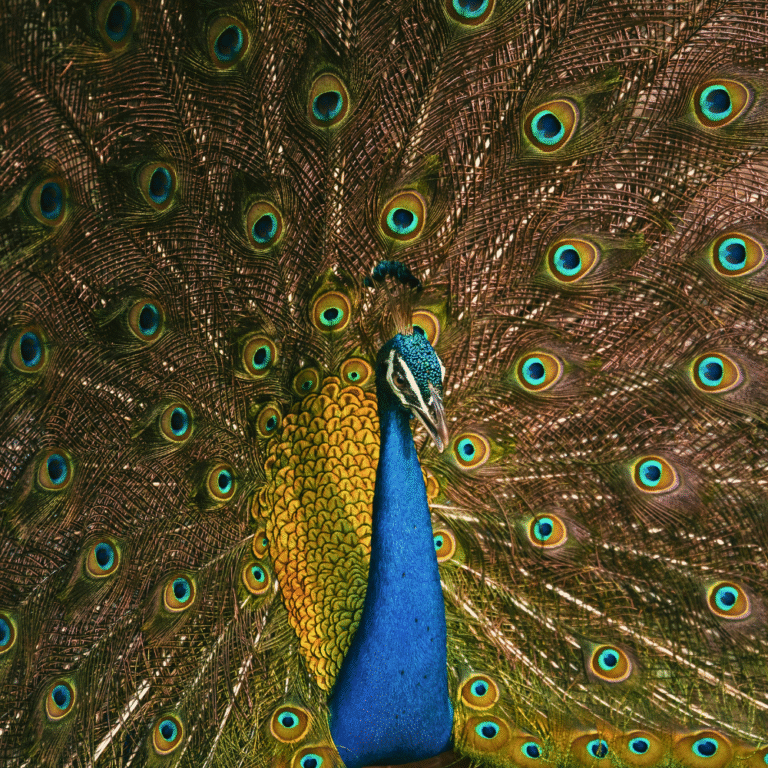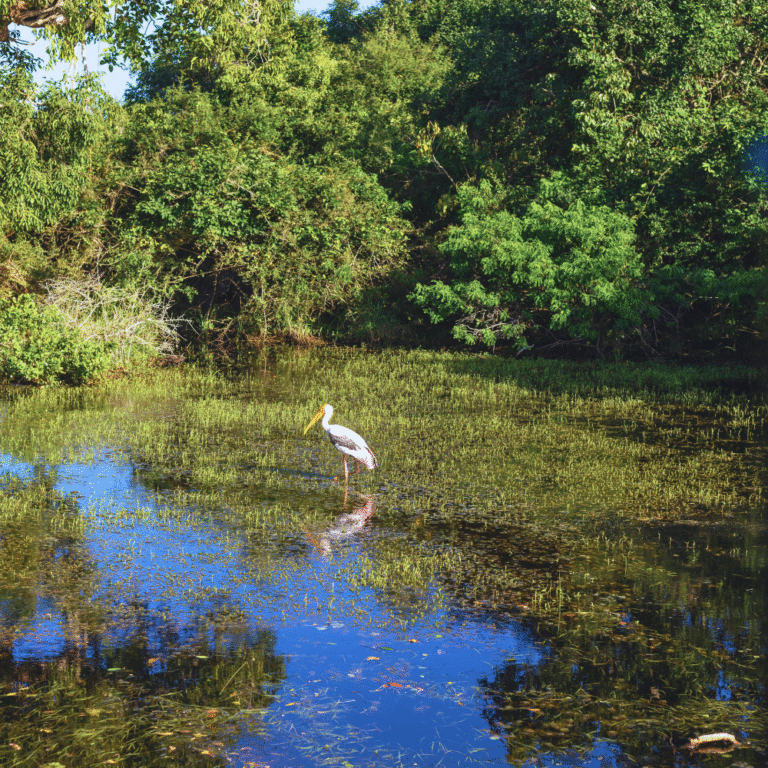
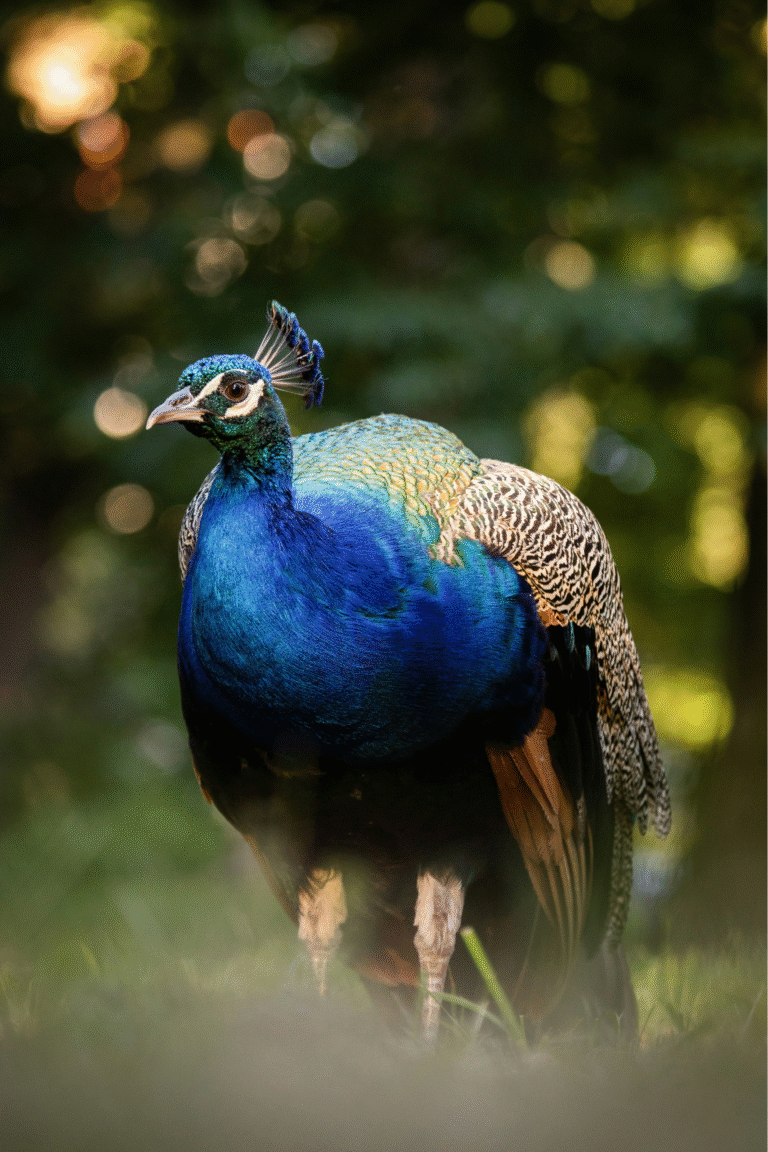
- A Birder’s Paradise: Kumana is a globally recognized Important Bird Area (IBA), with a documented 255 bird species and a larger bird sanctuary (declared in 1938) within the park. This is where you can see rare species like the black-necked stork, which is not found elsewhere in the country, and witness the annual migration of thousands of birds from April to July.
- Historically Significant: The park holds ancient cave drawings attributed to the indigenous Vedda people, depicting hunters and wild elephants. It is also part of the sacred Hindu pilgrimage route, the Pada Yatra, where devotees trek to the Kataragama shrine every year. The park was also once a favored hunting ground and, according to legend, was the home of the Nittaewo, a mythical race of dwarf ape-men.
- Contiguous with Yala National Park: Kumana is an extension of the much larger and more famous Yala National Park, but it’s far wilder and less developed, offering a more secluded and tranquil wildlife experience.
- Home to Rare Wildlife and Flora: While known for its birds, the park also supports a diverse range of mammals, including Sri Lankan elephants, leopards, and sloth bears, as well as reptiles like mugger crocodiles and Indian flap-shelled turtles. The park’s inland flora is dominated by the Palu tree (Manilkara hexandra).
- A Natural Wetland System: The park is a system of dry zone tropical thorn forests, water bodies, and coastal areas, with about 20 lagoons and tanks. The centerpiece is the Kumana Villu, a 200-hectare natural mangrove swamp that serves as a vital breeding and nesting ground for aquatic birds.