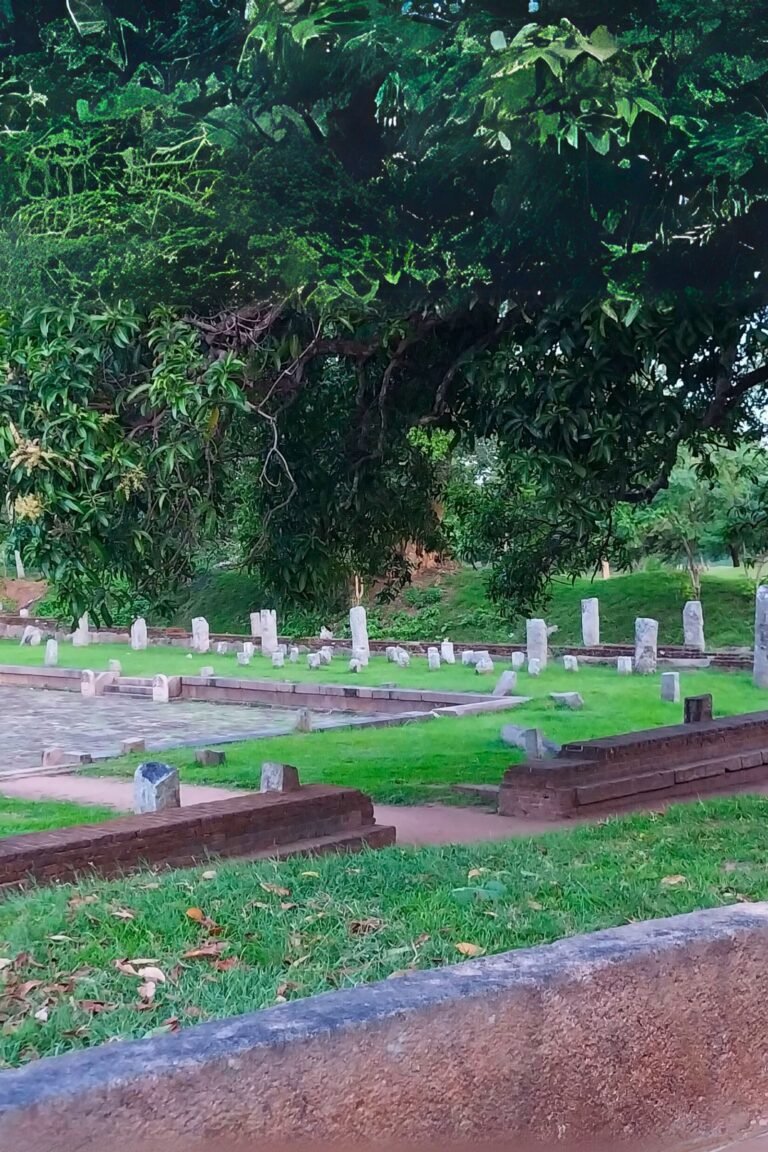
- Historical Significance: The Refractory Hall, also known as Alms Hall or Chatussala, dates back to the 3rd century BCE, built by King Devanampiya Tissa and later restored by King Vasabha in the 3rd century CE, showcasing the ancient architectural and cultural heritage of Anuradhapura.
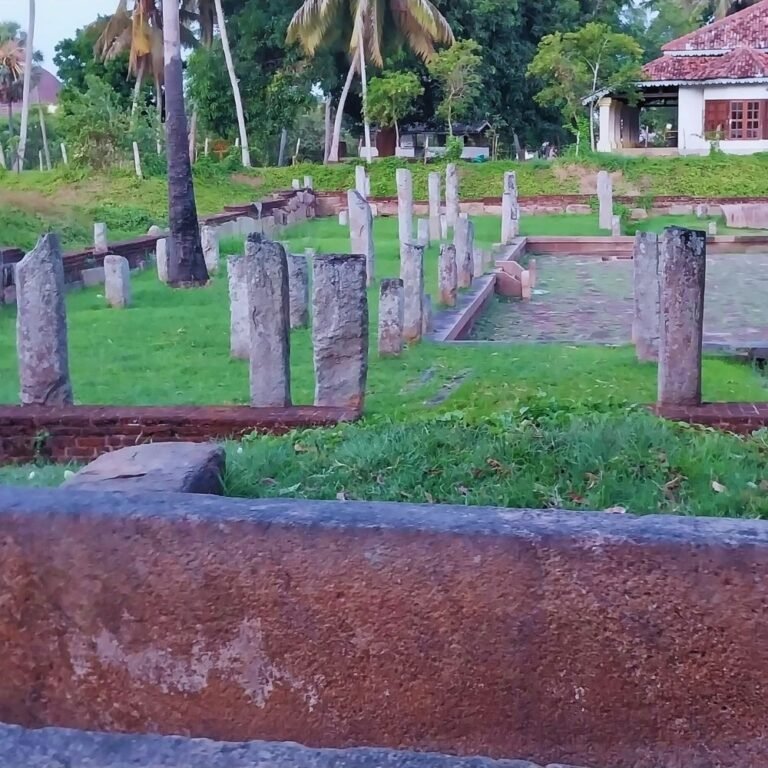
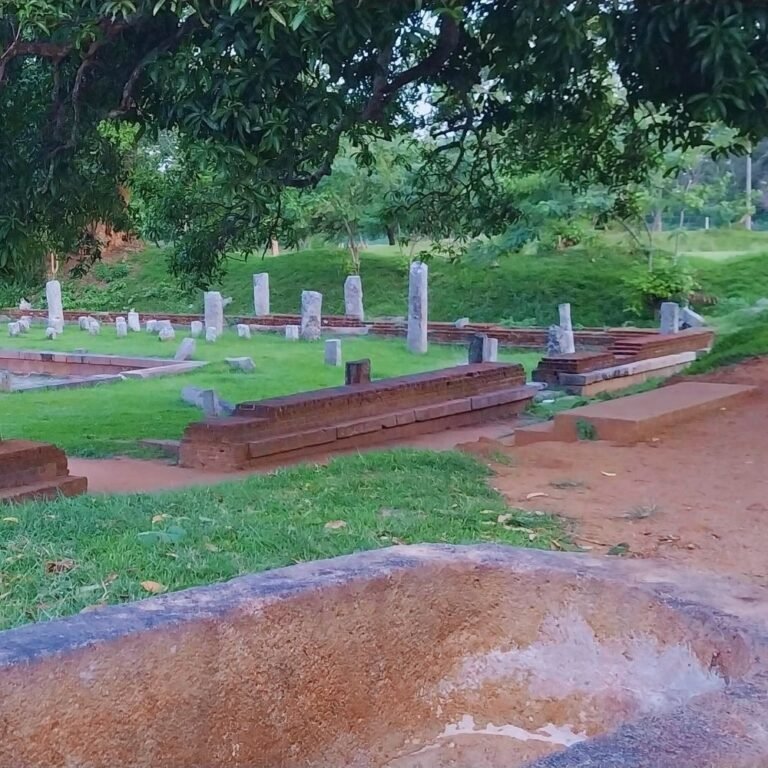
- Architectural Design: The hall is a square structure measuring 131 feet on each side, featuring a central stone-paved courtyard and steps on all sides, resembling similar alms halls in Mihintale and Abhayagiriya.
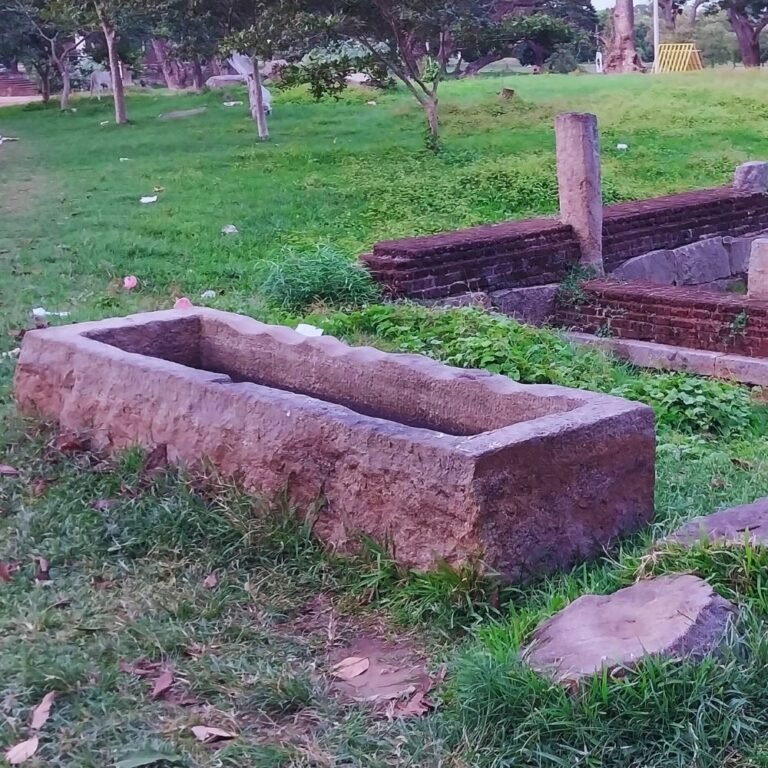
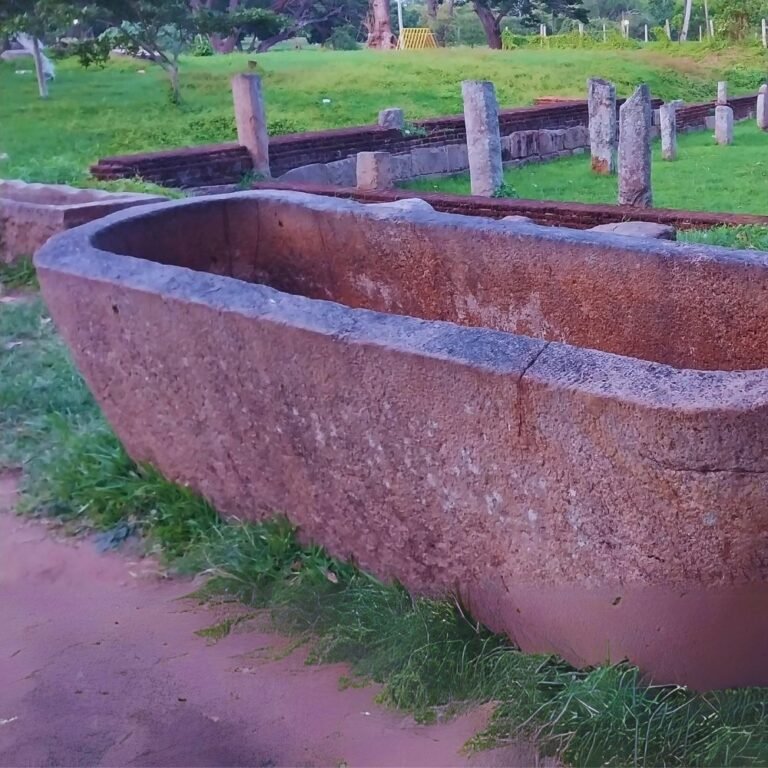
- Monumental Stone Troughs: It houses a massive stone “rice boat” 45 feet in length, accompanied by two smaller troughs, used to serve rice, vegetables, and porridge to thousands of monks daily.
- Religious Importance: Historically, the hall served as a dining place for over 3,000 monks of the Mahavihara, reflecting the scale of monastic life during the 5th century, as recorded by the Chinese monk Fa Hsien.
- Hidden Gem: Despite its rich history and unique features, the site lies off the common path between Ruwanweliseya and Sri Mahabodhi, making it a rarely visited yet intriguing spot for pilgrims and tourists.